
Over 130,000 Americans have ostomy surgery every year, and it’s estimated there are about one million people in the US living with an ostomy. I’m one of them, but I don’t consider myself a statistic. I’m an ostomate, a person who has an ostomy. It doesn’t define me, it’s simply part of who I am. Don’t know what an ostomy is? You’re not alone.
An ostomy is a surgical procedure where the doctor reroutes part of the intestines or the urinary tract so it exits through an opening in your abdomen. Waste is excreted into an external pouch that you empty and change regularly. Such a procedure may be temporary or permanent, and some common conditions that may lead to the need for an ostomy are colorectal or bladder cancer, Crohn’s disease, ulcerative colitis, or colonic inertia (intestines have difficulty moving waste out of the body, leading to chronic constipation).
The spot where the inner organs exit the body is called a stoma, which looks a little like a rosebud. It has no nerve endings, so it’s not painful. However, it does have blood vessels, so you have to be careful not to chafe it, or it may bleed. The incision site does have nerve endings, so you may feel pain in the area following surgery, but that resolves over time.
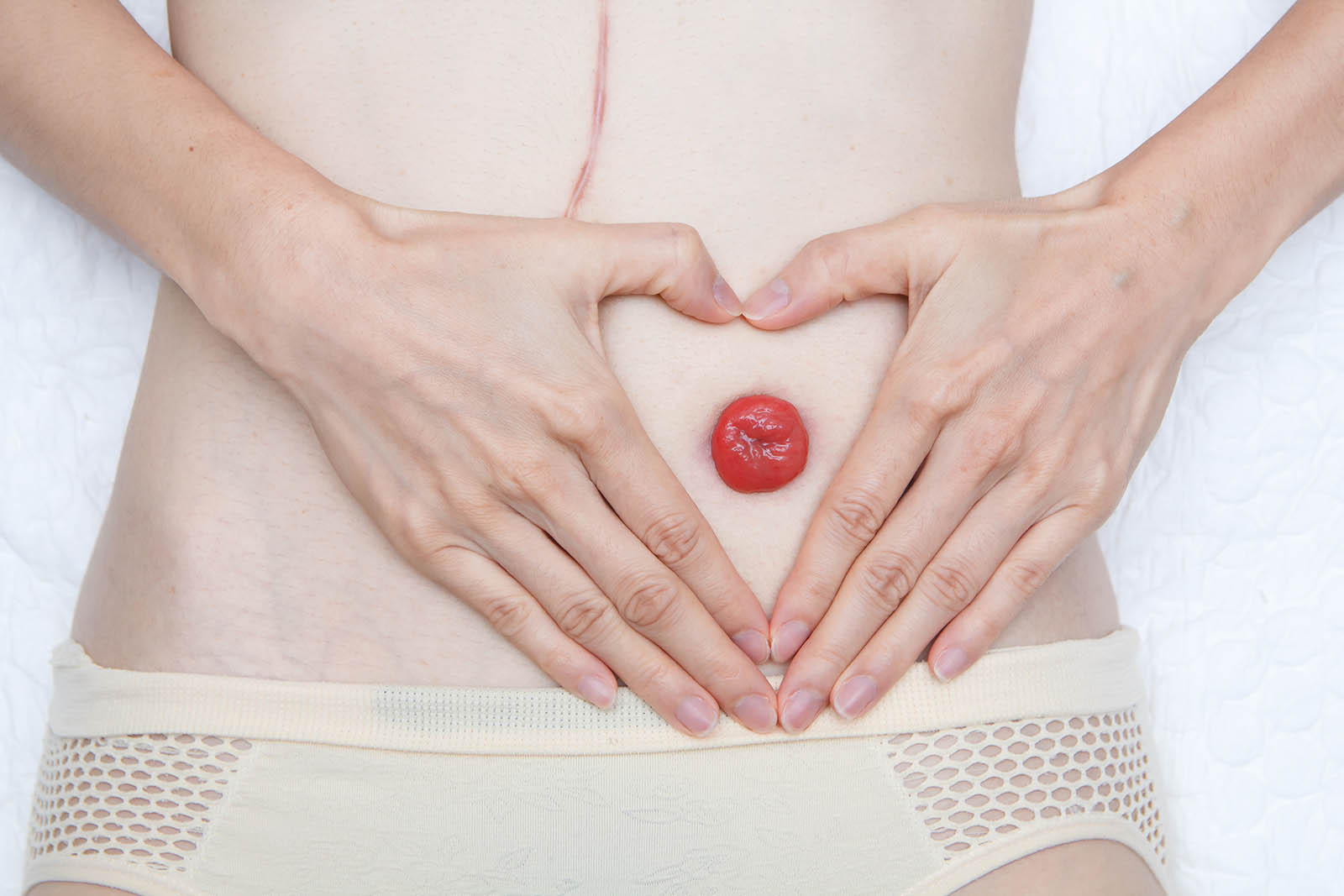 Photo by United Ostomy Associations of America
Types of ostomies
There are a number of different types of ostomies:
Loop ileostomy
In this procedure, the surgeon pulls a loop of small intestine out through an abdominal incision, then opens it up and stitches it to the skin to form a stoma. This is a reversible procedure and is often used to give the intestines a chance to rest and heal from disease.
End ileostomy
The surgeon separates the ileum of the small intestine from the colon and brings it out through the abdomen to form a stoma. This is an irreversible procedure.
Colostomy
The surgeon directs a part of the colon out through the abdomen to form a stoma. A colostomy may be temporary or permanent, and it’s often done after bowel surgery or injury. Temporary colostomies usually bring the side of the colon up to an abdominal incision, while permanent colostomies connect the end of the colon to the incision.
Urostomy
A urostomy, also called an ileal conduit, is usually part of the surgery to remove your bladder (cystectomy), either due to bladder cancer or damage to the urinary tract. The surgeon forms the stoma by directing part of the tract out through the abdomen. This is an irreversible procedure.
Living with an ostomy
No matter which type of ostomy you have, you’re going to need some time to physically and emotionally get used to it, and everyone works through it at their own pace. You may face practical issues as you adjust to a new way of life that centers around being mindful of your pouch and its needs, such as when you need to empty it, how you control odor, and how you deal with sounds that emanate from the stoma and that accompany pouch movement.
You may ask yourself how or if this will impact your job, your ability to ride a bike or go for a swim, or interfere with a physical relationship. Will your stoma get in the way of daily activities? Will everybody be able to tell you’ve had the procedure?
You may also deal with emotional and mental concerns such as a negative body image, feelings of inadequacy, loss of self-esteem, and hesitation about intimacy, even if the ostomy doesn’t physically prevent you from having sex.
All of these are valid concerns, but you’re not alone in your journey, and there are things you can do to help make your life better.
WCONs (wound care and ostomy nurses)
Your first, most important point of contact is your ostomy nurse. They’re the one with all the practical knowledge you’ll need, from what type of pouching system is best for you to how often you’ll need to empty it to how and when you change it out. They’ll walk you through the process before you ever leave the hospital, ensuring that you’ll be good to do it on your own once you’re discharged.
They also have great advice for how to keep your peristomal skin (the abdominal skin around your stoma) healthy and free of irritation from the barrier that holds the pouch in place and the acids in the output. Draw up a list of questions to ensure you cover everything you need to know, including which foods are good and which you need to avoid. This varies from one person to another, as your underlying condition may inform what you can and can’t eat. The type of ostomy will also affect the speed at which food moves through your system.
Many hospitals also have outpatient clinics staffed with WOCNs, so if you run into a problem outside of the hospital, you can schedule an appointment with one of those. The nurses there can also check that you’re maintaining your stoma well and that your technique for changing out the system is effective.
Odor
There’s no question the output from the stoma has a rather acrid and unpleasant odor, but most of the major ostomy companies, as well as places like Amazon, carry deodorizer tablets or drops you can use that can prevent it from escaping the pouch. And some pouches even have built-in filters that prevent the odors from getting out in the first place, so you never have to worry about someone noticing the smell.
Activities
As for activities, you’ll be able to do most, if not all, of the same things you did before your surgery; wearing a medical appliance doesn’t limit your ability to run, jump, go for a bike ride, or even go in the pool, if that’s what you want to do. The only things off-limit are sitting in a hot tub or going in a sauna, as the high temperatures can melt the plastic of the pouch.
I was sure, once I had my surgery, that I’d never be able to swim again, either because I couldn’t go in the water since the pouch might leak (it doesn’t) or because my ostomy would be extremely visible. Then I found out there are companies that specialize in designing clothing especially for ostomates. Whether it’s men’s trunks, a tankini, or a bikini, swimsuits (and other clothing) come with a discreet pocket in the front into which you slip your pouch, and the fabric holds it securely against your skin. No movement, no bulges, no leaks, no problems. And since the suits cover the entire pouch, no one can tell you have an ostomy unless you tell them.
The company with the biggest line of swimsuit options is unquestionably Madrid-based SIIL Ostomy, which serves the international community. All their suits (and their other clothing) are designed by ostomates for ostomates, so you know you’re going to get exactly what you need. Their range of sizes is also impressive — from XS to XXL — and they come in multiple colors, so you can pick out exactly what you want. They even have swimsuits for kids with ostomies.
In addition, they carry regular underwear (still with the same front pocket to hold the pouch); plain or lacy wraps to hold the pouch against you under regular clothing, so the pouch doesn’t move and make noise; and lingerie for more intimate moments. Yes, you can still have a healthy sex life with an ostomy; the key is being open and honest with your partner about how you feel and why. You may find you have to adjust your positions slightly to avoid putting undue pressure on the stoma, but it’s absolutely doable.
SIIL also carries a phenomenal support/hernia belt (ranked Amazon’s “Best Choice”). I’d been using a belt I got elsewhere, but it wasn’t really comfortable, and I could never wait till I got home and could take it off. When I tried SIIL’s belt, though, not only did it fit perfectly, but it was so comfortable I forgot I had it on! And unlike the popular “stealth belt,” which requires that you roll up the pouch to fit it in the belt, causing backups, the pouch in the SIIL belt lies flat against your skin, allowing for normal movement.
SIIL also provides world-class customer service. Their mission is “to help each and every person living with an ostomy around the world live better lives and regain their confidence. Through thoughtfully designed adaptive clothing, SIIL focuses on comfort, dignity, and freedom in everyday life. The most important thing we want people to know is that they are not alone. Even when large fashion brands forget the ostomy community, SIIL is always here, building a supportive and caring community where people can feel understood and confident again.” I love the look, fit, and security of the products I’ve bought, and when I had a problem with a shipment, they were right on top of it, making sure I got the product as quickly as possible.
The bottom line is that an ostomy doesn’t define who you are. You can be as active as you want to be, wear clothing that flatters you without worrying about the pouch showing, and be comfortable in your own skin. You can lead a full, normal, and happy life. And at the end of the day, isn’t that what we all hope for?
(Full disclosure: Miriam Ruff is an ambassador for and an affiliate of SIIL Ostomy. She advocates for ostomates on their behalf.)
Leave a Reply